
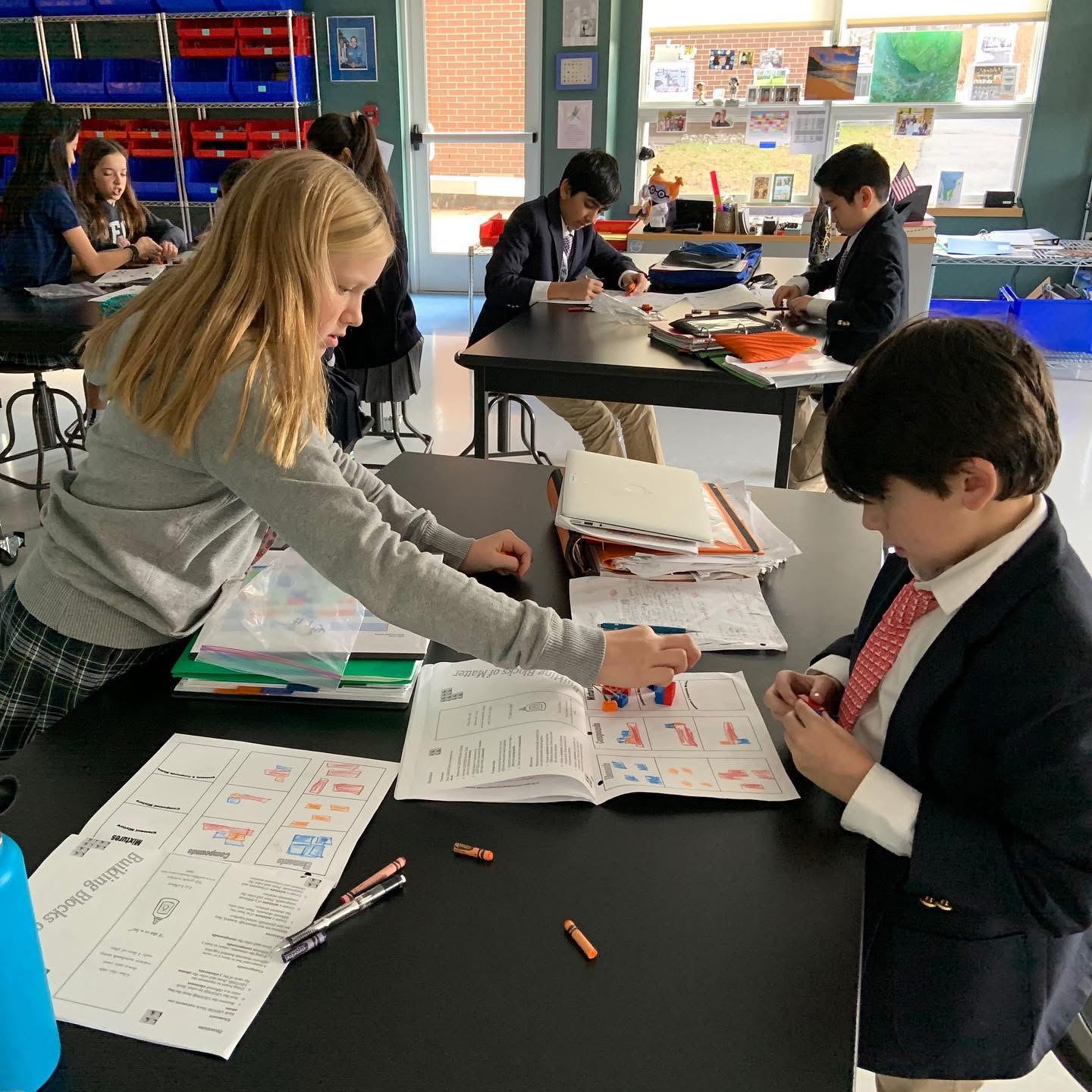
Objectives: Students will be able to use a model and demonstrate how atoms are arranged to create elements, compounds, and mixtures.
Materials
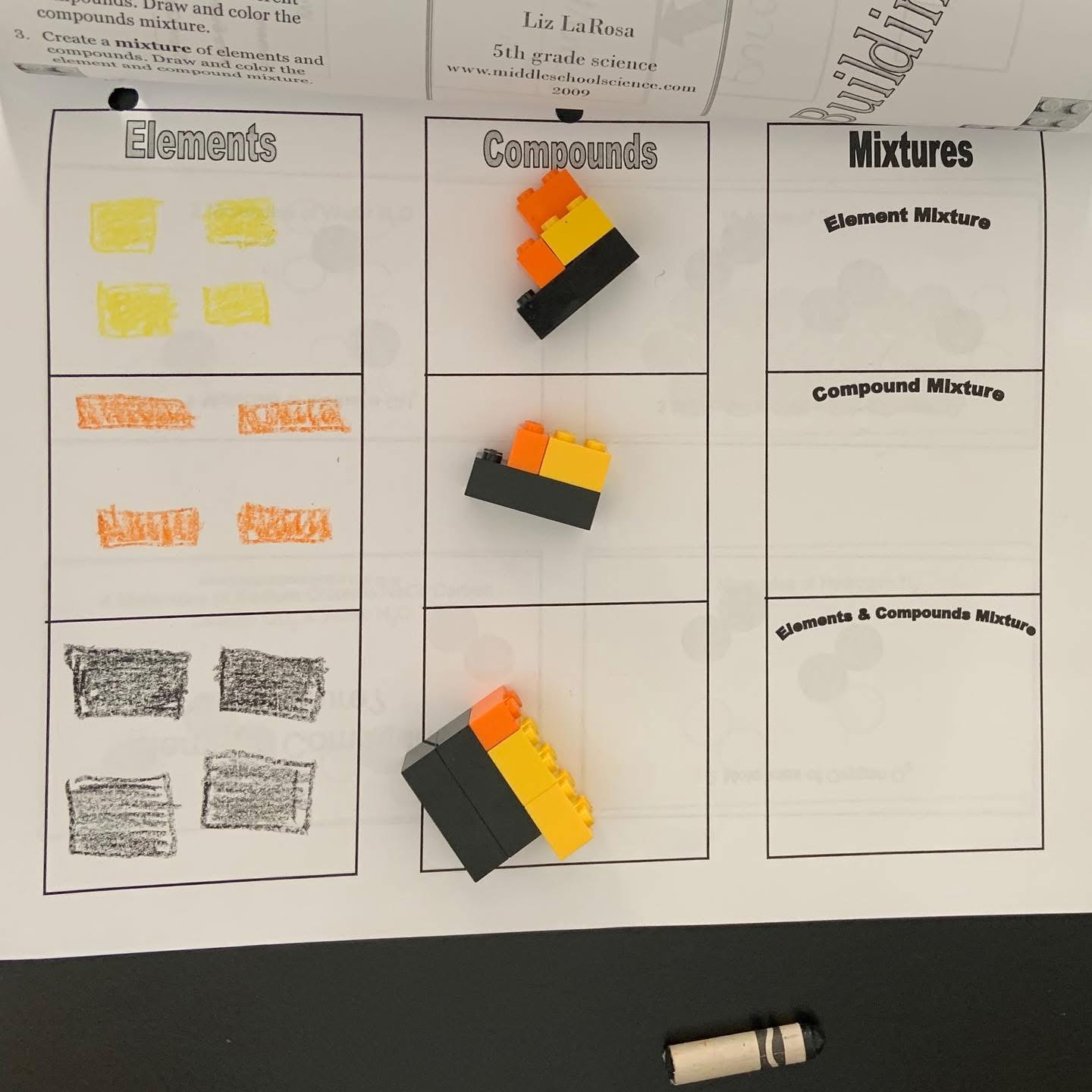
- 12 Legos – 3 different colors and sizes with 4 of each kind
- Lego Bricks must be the same size for each color (see photo above)
- stored in sandwich sized zip-top bags
- 1 set per 2 students
- colored pencils
- I placed 3 crayons in each bag along with the Lego pieces
- Student worksheet (pdf)
Background Information
- Each Lego Brick represents one atom
- Each colored Lego Brick represents one atom for each element
- example: 4 blues = one element, 4 oranges = second element, 4 greens represent a third element
- When Lego Bricks are snapped together, that represents a chemical bond and one compound
- Lego Bricks that are not snapped together are not chemically bonded to each other
- For mixtures, you can have combinations of single bricks (elements), bonded bricks (compounds), or a mixture of both elements & compounds
 Middle School Science Lessons
Comments are welcome!