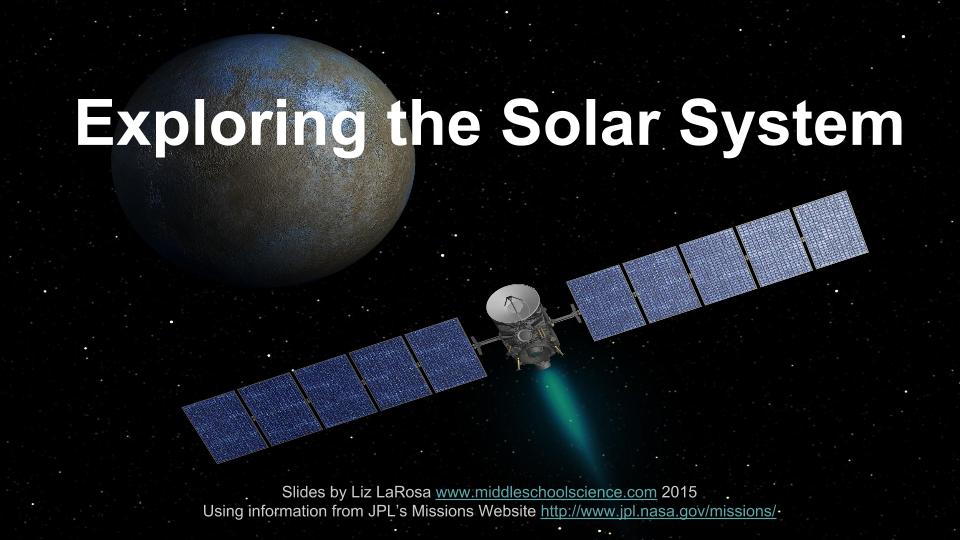
After taking an in-depth look at missions to Mars (blog entry) and learning more about the planets in the solar system (blog entry), we learned about past, present, and future unmanned space missions and their objectives. (updated 5/7/25)
Objectives: students will learn about the history of unmanned space exploration and the information we have collected about our solar system and beyond.
Materials
- JPL Missions Website – current and past missions for space exploration
- Mission Assignments (updated) students will select their missions and enter their research on shared Google sheets, view only, make a copy
- Mission Information using Google slides presentation template, view only, make a copy
- JPL Videos – 📽 collection of missions for students to dive into
- Sample slides from one of my 6th grade groups, ungraded/unedited (pdf)
Each group of students created a shared Google Slides Presentation, and within each group, students were assigned numbered slides with specific missions or locations. This was a great way for the students to learn about different missions, practice their research, tech, and collaboration skills, and to get a better understanding of the history of unmanned space missions.
When students were done with their slides, the next class involved a fun game of “Name that Mission” with the research teams competing against each other. Using slides that the students created, I pulled a total of 20 or so slides from different groups and classes and added animations to them. If they could name the mission without clues (just an image of the spacecraft) they earned 2 points, if they named the mission with clues, they earned 1 point.
Below is a video about DAWN (2007-2018) – the mission arrived at Ceres, narrated by Leonard Nimoy. 🖖🏼
 Middle School Science Lessons
Comments are welcome!