Purpose: (updated
- Students will convert their name from a “DNA” sequence into a “protein chain” made of “amino acids”.
Materials:
- Student Worksheet : Students will convert their alphabetical name (DNA) to a Protein Chain (Google Doc, view only)
- Compound Interest: DNA codes for the Amino Acids Handout (pdf)
- pre-cut 2 inch wide strips of construction paper (12×18) in the following colors – red*, pink, yellow, orange*, green, lt. blue, dk.blue, and black*
- (*) be sure to have more of these colors since they are vowels
- I used a paper cutter and was able to make a lot of strips very quickly ahead of time
- markers
- staplers
- clothes pins and string to hang up in classroom

Procedures:
- This activity should be used after DNA and protein synthesis has been introduced. This activity will help reinforce the concept of how the sequence of DNA codons create specific amino acids, and in turn, the amino acids are joined together to create specific proteins.
- Each student will write the letters from their first and last name onto the student handout.
- Using the chart, they will find the amino acid associated with the first letter of their first name.
- For example, if the first letter is “L”, it will code for Leucine. They will select one of the codons for Leucine and write it on their chart.
- Write the color of the paper link they will need for “L”, in this case, it is Red.
- Repeat for every letter in their name.
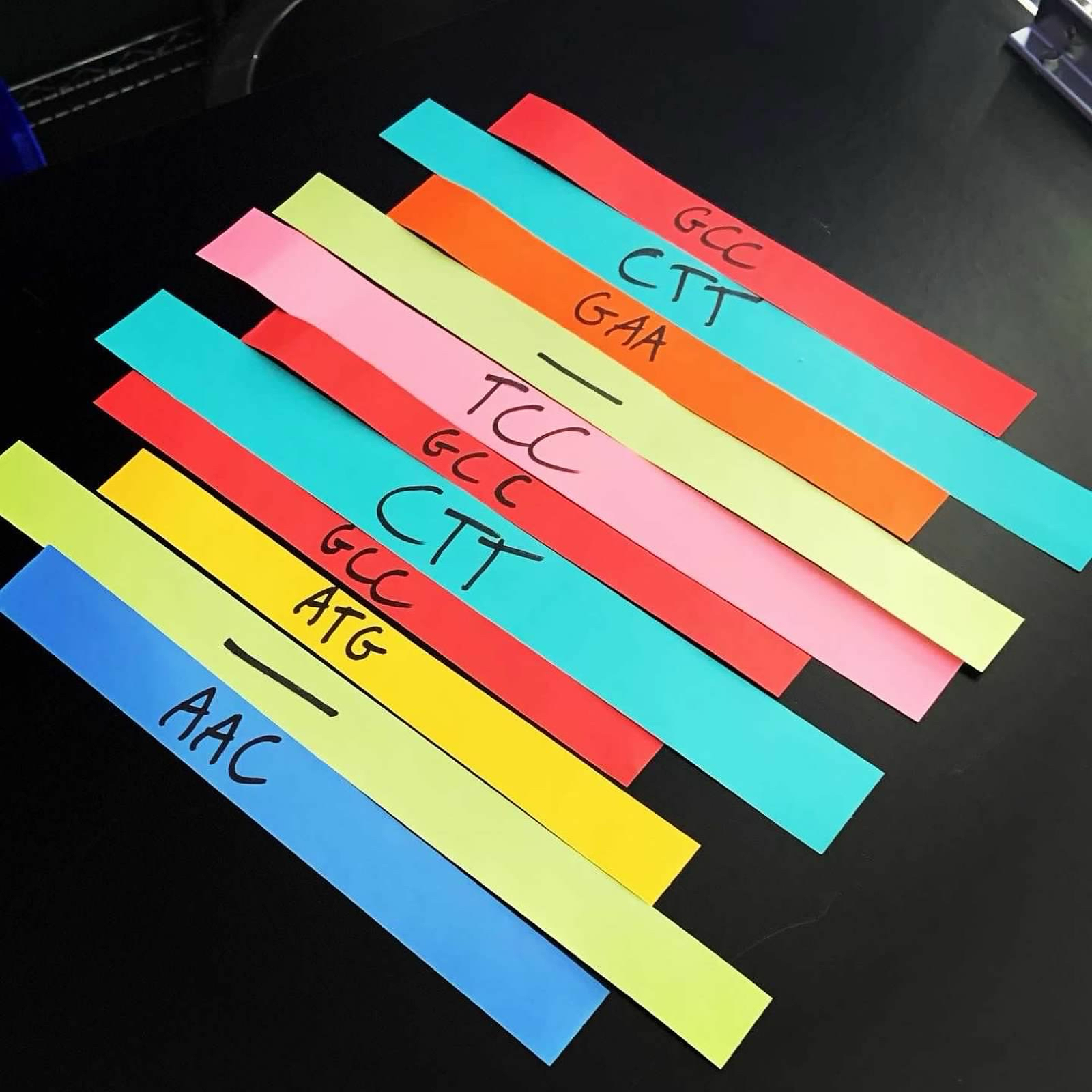
- Once their handout is completed, they will select the colored links, one for each letter of their name.
- The colored links will be placed in the same order as the letters in their name.
- On each link, write one of the codons for that letter. For example, “L” would be “CTT” on a Red link.
- Starting Loop – write their name on it so they know it is theirs.
- Loop and staple the first amino acid of their name.
- Weave through the second amino acid and staple the loop closed.
- Continue until all the amino acids have been linked together.
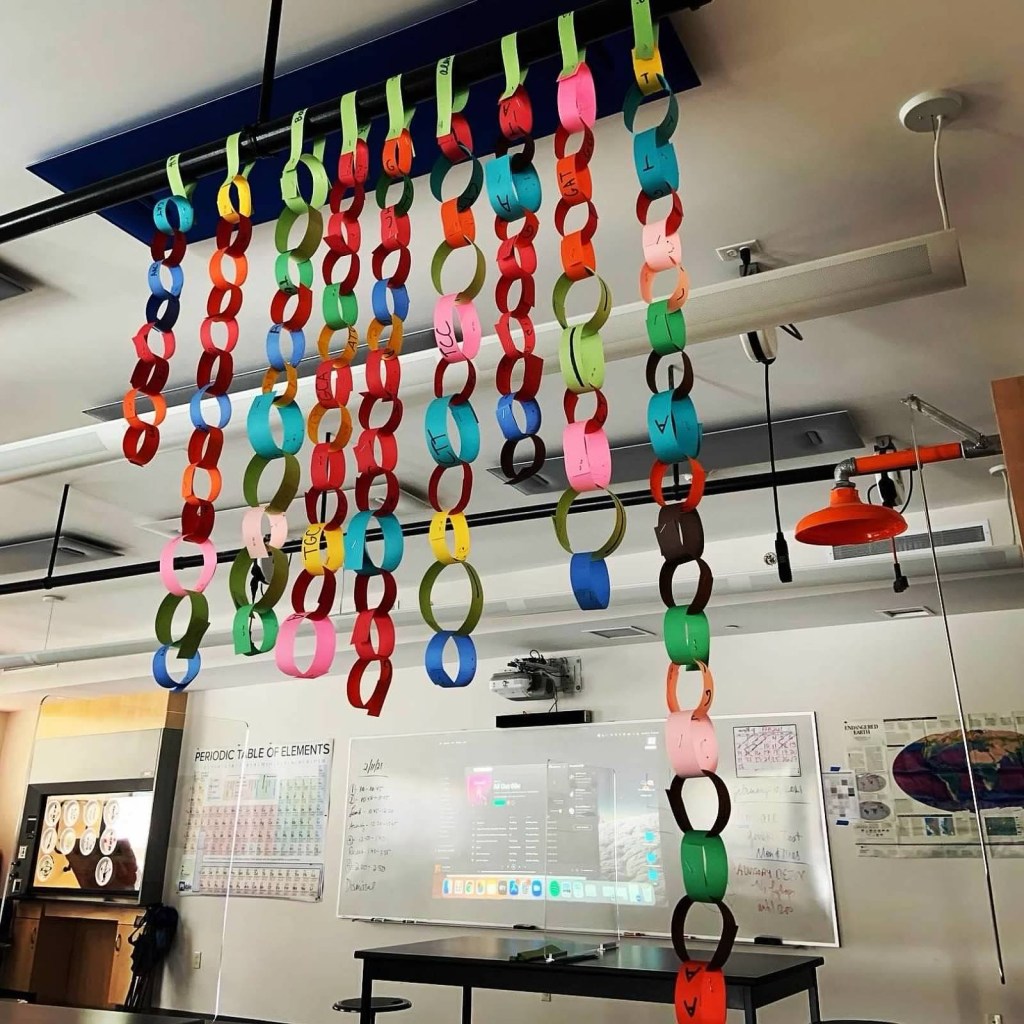
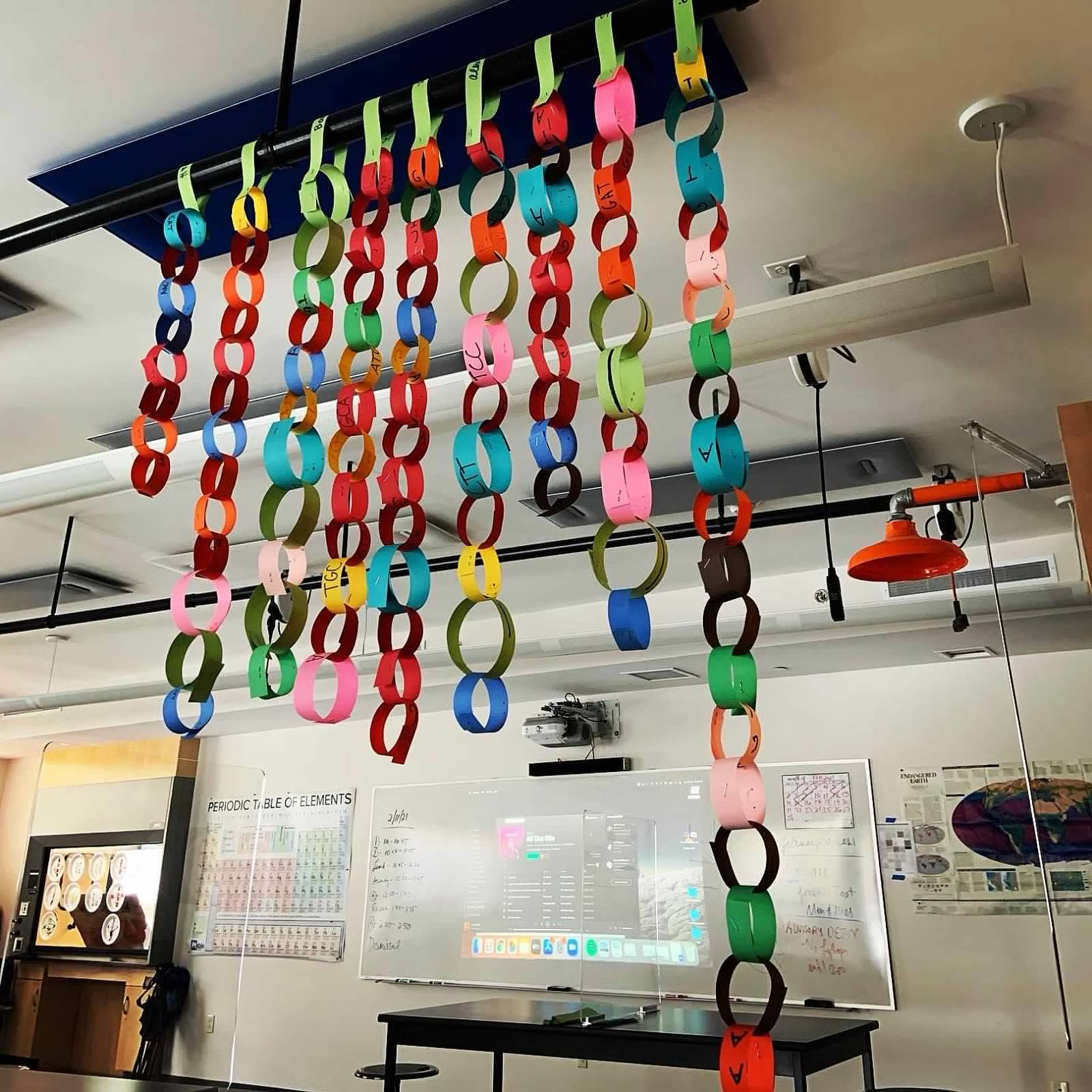
- Hang up the protein chain, be sure to have that first link with their name on it at the top.
- Look for patterns – what color was used the most? Which group of amino acids was it? Which group of amino acids was used the least? Who had the longest name? Etc.
 Middle School Science Lessons
Comments are welcome!